

🎙️ Gato AI Translations for Polylang on the WP Tavern podcast

I (Leonardo Losoviz), the creator of Gato AI Translations for Polylang, joined Nathan Wrigley on the WP Tavern podcast, for episode #217 – "Affordable and Accurate WordPress Translations Using AI". 🎙️
We had a great conversation about exactly what this plugin is built for: making it genuinely easy — and cheap — to run a multilingual WordPress site, thanks to AI.
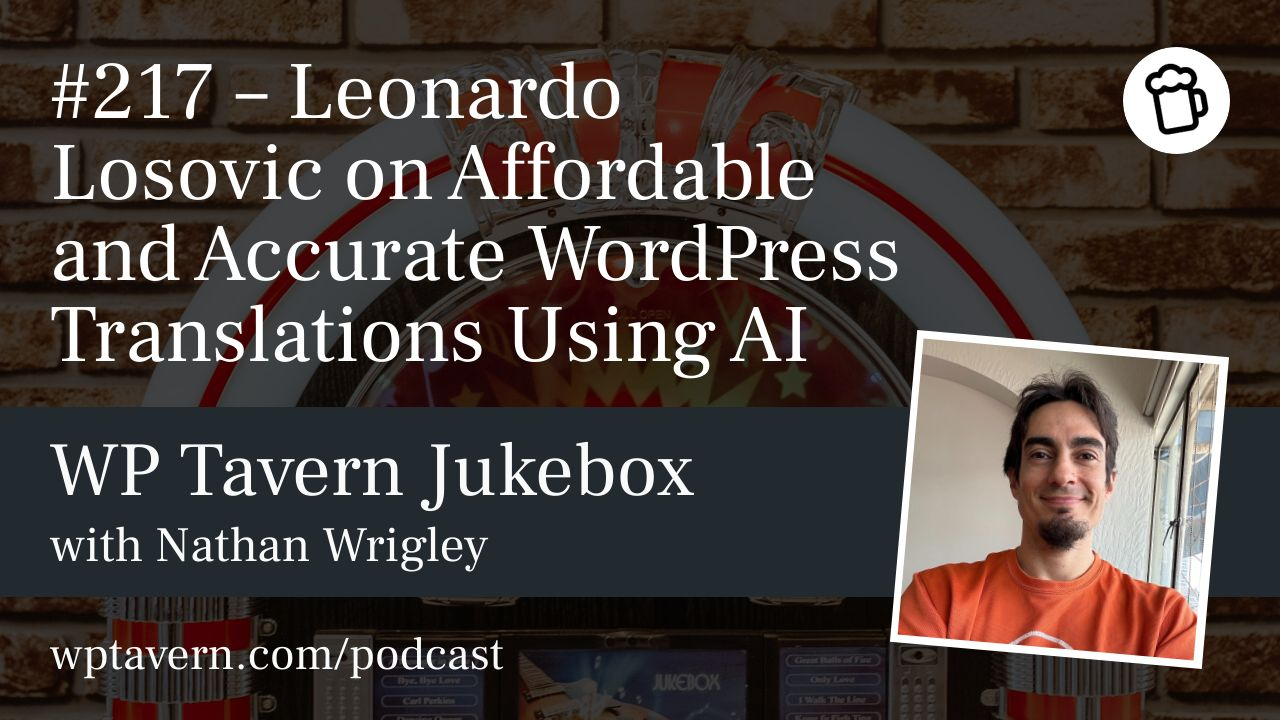
👉 Listen to the episode on WP Tavern
What we talked about
On the podcast we got into the ideas behind Gato AI Translations for Polylang — the very thinking this plugin is built on:
- Why translate at all. There's both a moral case (making your content accessible to everyone, in their own language) and a very practical one (reaching audiences your competitors can't).
- From expensive to "literal cents". Translation used to mean hiring professional human translators at a steep cost. With AI, translating a post can now come down to a tiny fraction of that — just the cost of the tokens consumed.
- Accuracy is good enough — and getting better. In practice, the vast majority of AI translations come out accurate, to the point where you no longer need a full professional review of every sentence to ship with confidence.
- The Polylang approach. Rather than translating on the fly at request time, the plugin creates a separate post entry per language. That's better for performance, for SEO, and for letting you tweak each translation independently.
- SEO done right. We covered
hreflangtags and how to structure language-specific URLs — whether you go with subdomains or path-based prefixes. - Translate at the right moment. A simple checklist: finalize your content before translating, so you don't burn tokens re-translating drafts. Re-translate only when the source is settled.
- Images and media. Images are usually language-agnostic; what gets translated is the surrounding text, captions, and metadata.
- Where WordPress is heading. With features like collaborative editing on the horizon, there's a lot of room for AI and humans to work together right inside the editor.
Give it a listen
If you run a multilingual site — or you've been putting it off because translation felt too expensive or too much work — I think you'll enjoy this one.
🎧 Listen to episode #217 on WP Tavern
Want to put these ideas into practice? Start with our comprehensive guide to multilingual translation for WordPress.
And to see it all in action, explore Gato AI Translations for Polylang.
Thanks to Nathan and the WP Tavern team for having me! 🙏
